Most traders search for the perfect strategy, indicator, or news flow. But the biggest opponent in trading isn’t the market — it’s your own mind. Years of research on trader performance point to four truths that consistently separate long-term winners from short-term gamblers.
In this guide you’ll learn:
- Why the real “smart money” often moves against the crowd.
- Why position sizing beats win rate.
- The brutal math behind losses and drawdowns.
- Why adaptability is the true edge.
1) The Real “Smart Money” Bets Against the Crowd
Many traders assume that success comes from following hedge funds and large speculators. But data from the Commitment of Traders (COT) report shows a different story. The report breaks participants into three groups:
- Commercial Hedgers (Insiders): Producers and consumers hedging real business risk.
- Large Speculators: Trend followers who bet on price direction.
- Small Traders: Retail participants who often enter late.
Decades of research show Commercial Hedgers tend to be positioned against market extremes. They buy when speculators are most bearish and sell when speculators are most bullish. Their advantage comes from operational information outsiders do not see — real inventory, demand, and supply conditions.
Key takeaway: Instead of chasing a move with the crowd, watch for extreme disagreement between contrarian insiders and trend followers. This often signals major turning points.
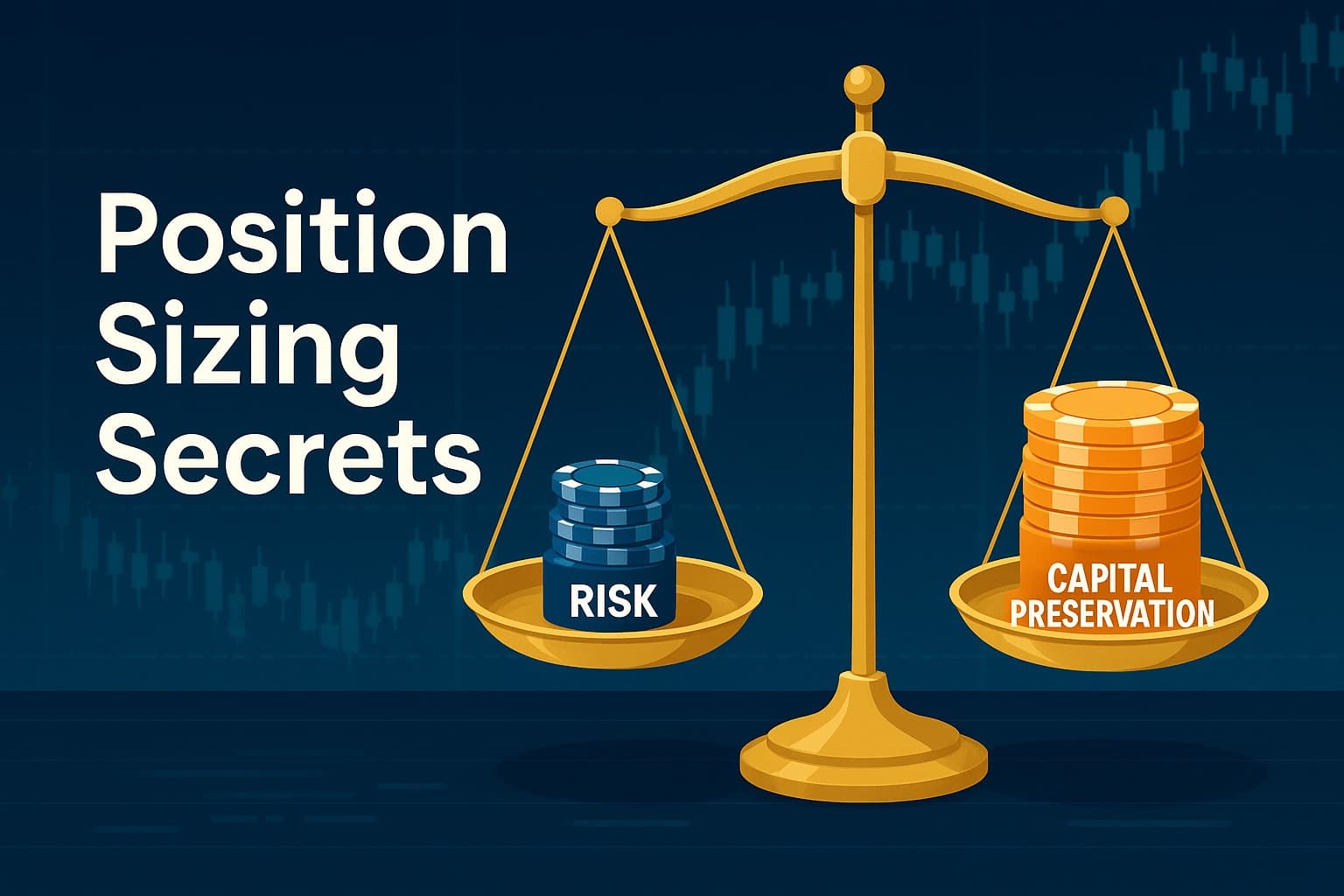
2) Position Sizing Matters More Than Win Rate
Win rate is easy to measure, but it’s not the best predictor of success. Position sizing is.
A controlled study by researcher Johan Ginyard showed that students who received a short lecture on position sizing and risk management were 10x less likely to go bankrupt than those who did not.
Successful traders in the study consistently took smaller position sizes than losing and bankrupt traders.
As legendary trader Bruce Kovner said:
“Risk management is the most important thing to be well understood. Undertrade, undertrade, undertrade.”
Key takeaway: Survival comes first. If you size risk correctly, a good system has time to work.
3) The Brutal Math of Losses
Loss aversion makes traders hold losers too long. But the math is unforgiving:
- A 10% loss needs an 11.1% gain to recover.
- A 30% loss needs a 42.9% gain to recover.
- A 50% loss needs a 100% gain to recover.
- A 90% loss needs a 1000% gain to recover.
This is why cutting losses is not optional — it’s mathematical necessity. A rigid, pre‑defined position size and stop-loss are your best defense against emotional decisions.
Key takeaway: Small losses are manageable. Large losses are exponentially harder to fix.
4) Your Edge Is Your Ability to Adapt
Many traders believe the edge is a secret formula. The truth: adaptability beats any static strategy.
Market regimes change. A system that thrives in low‑volatility ranges can fail in high‑volatility trends. The best traders are not locked to one identity (“I’m a trend trader” or “I’m a value trader”). They evolve with the market.
Performance coach Dr. Brett Steenbarger calls this the ability to “recreate success.” The biggest barrier to adaptation is ego and functional fixedness — becoming so attached to a strategy that you can’t see new opportunities.
Key takeaway: The real edge is a process for changing when the environment changes.
Conclusion: From Predicting the Market to Mastering Yourself
Trading success isn’t about perfect prediction. It’s about disciplined behavior, risk control, and adaptability.
Quick summary
- Contrarian positioning often beats crowd-following.
- Position size matters more than win rate.
- Losses grow exponentially — cut them quickly.
- Adaptability is the ultimate edge.
If your process for adapting is your strategy, is your current process built to last — or built to break?